Loading..

My Pet Is Not Eating: When Should I Be Worried?

My Pet Is Not Eating: When Should I Be Worried?

A missed meal can happen for a simple reason, but a sudden loss of appetite can also be one of the earliest signs that a dog or cat is unwell. The difficult part for owners is knowing when to watch closely and when to contact a veterinarian. There is no universal “safe” number of hours that applies to every pet. Age, species, medical history, how long the appetite change has lasted and whether other symptoms are present all affect how urgently a pet should be assessed.

First, Has Your Pet Truly Stopped Eating?

Before assuming your pet has lost their appetite, check whether someone else has fed them, whether they have access to another food source, or whether they are eating treats while refusing normal meals. Also consider whether the food itself has changed in smell, texture, recipe or freshness. A pet who refuses a normal meal but eagerly eats treats is still showing a change worth paying attention to, especially if the behaviour is new or persistent.

Common Reasons a Dog or Cat May Stop Eating

A temporary change or stress Travel, a new home, boarding, unfamiliar people or animals, changes in routine and other stressful events can affect appetite. However, stress should not automatically be blamed when a pet could be physically unwell. Dental or mouth pain A pet may approach food and then walk away, chew differently, drop food or prefer softer options when eating is uncomfortable. Dental disease, a damaged tooth, oral inflammation or another mouth problem can reduce appetite. Stomach or intestinal problems Nausea, vomiting, diarrhoea, constipation, gastrointestinal inflammation, dietary indiscretion and foreign material in the digestive tract are among the many problems that can affect appetite. A pet that is not eating and is repeatedly vomiting, painful or unable to keep water down needs prompt veterinary attention. Pain or illness elsewhere in the body Loss of appetite is not limited to stomach problems. Fever, infection, pain, kidney or liver problems and many other illnesses can make a pet less interested in food. That is why appetite loss is a symptom rather than a diagnosis. Medication effects Some medicines can affect appetite or cause nausea. If appetite changed after starting medication, contact the prescribing veterinarian. Do not stop an important medication without advice unless you have been specifically instructed to do so.

Cats That Stop Eating Deserve Particular Attention

Cats can become medically unwell when they do not eat adequately, and prolonged food refusal can have serious consequences. A cat that has stopped eating should not simply be left for several days in the hope that hunger will eventually win. Contact a veterinarian for advice, especially if the cat is overweight, already ill, very young or showing other symptoms.

Look at the Whole Pet, Not Just the Food Bowl

The urgency becomes clearer when you look for accompanying changes. Contact a veterinarian promptly if loss of appetite occurs with: repeated vomiting or diarrhoea marked lethargy, weakness or collapse a swollen or painful abdomen difficulty breathing repeated retching without producing vomit difficulty urinating or repeated unsuccessful attempts to urinate signs of significant pain blood in vomit or stool suspected poisoning or ingestion of a foreign object rapid deterioration or any symptom that makes your pet seem seriously unwell Very young pets, senior animals and pets with conditions such as diabetes or other chronic disease may need assessment sooner than a healthy adult pet because they have less room for prolonged changes in food intake.

Should I Try to Tempt My Pet With Different Food?

For a pet who is otherwise bright and has only just become mildly fussy, your veterinarian may sometimes advise simple feeding measures. But repeatedly changing foods, offering rich table scraps or force-feeding can be unhelpful and may worsen certain problems. If your pet is nauseous, painful or has a blockage, making the food more tempting does not address the cause. If you call the clinic, be ready to say when your pet last ate a normal meal, whether they are drinking, whether they can keep water down, when they last urinated and passed stool, and whether there has been vomiting, diarrhoea, pain, coughing, breathing changes or possible access to toxins or foreign objects.

How Will a Vet Investigate Loss of Appetite?

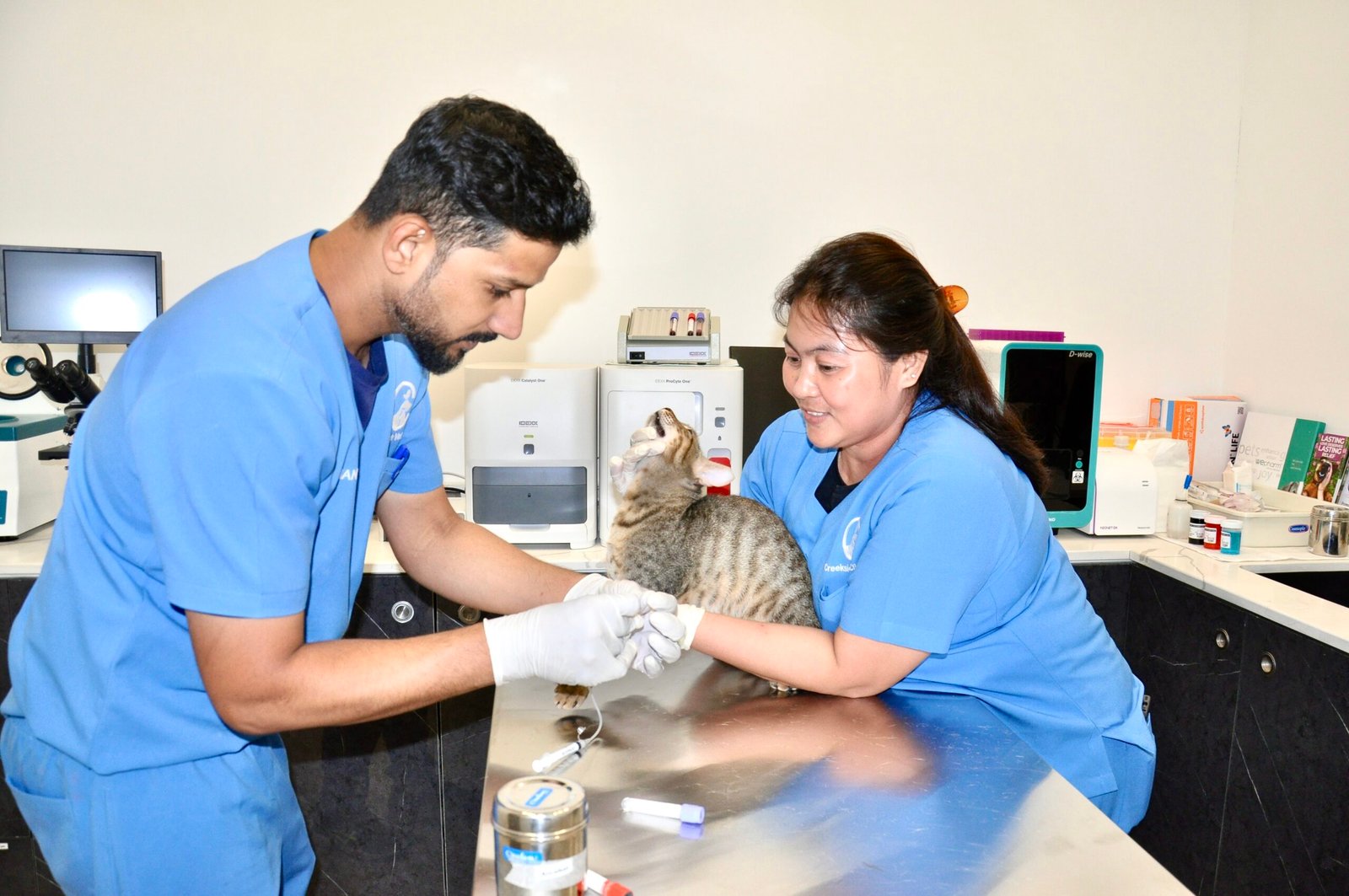
The first step is usually a history and physical examination. What happens next depends on what the veterinarian finds. Diagnostic tests such as blood work or imaging may be recommended in some cases, while other pets may need treatment for nausea, pain, dehydration or an identified underlying condition. Pets that are significantly unwell may require hospitalization and monitoring.

When Is Not Eating an Emergency?

Loss of appetite becomes much more urgent when it is accompanied by severe or rapidly worsening symptoms. Breathing difficulty, collapse, repeated unproductive retching, suspected poisoning, severe pain, inability to urinate, significant trauma or persistent vomiting are examples of situations where waiting for a routine appointment may not be appropriate. Creekside Veterinary Clinic provides 24/7 emergency veterinary care in Dubai. If you are unsure whether your pet’s symptoms can wait, contact the clinic and describe what is happening so the team can advise you on the next step.

Do Not Wait for a Pet to Look “Very Sick”

Pets cannot explain nausea, pain or weakness, and some animals hide illness surprisingly well. A clear change from your pet’s normal eating pattern is useful information, especially when it persists or appears alongside other symptoms. If your dog or cat has stopped eating and you are concerned, arrange a veterinary consultation rather than relying on appetite alone to tell you how serious the problem is.
Remember, consistency and patience are key when litter training your cat. With the right setup and positive reinforcement, your cat will quickly adapt to using the litter box, ensuring a clean and comfortable environment for both of you.
Check Your Answers

Frequently Asked Questions

1
How long can a dog go without eating?

There is no single waiting period that is safe for every dog. A dog’s age, health and other symptoms matter. Contact a veterinarian sooner if your dog is unwell, very young, elderly, has a chronic condition or is showing additional warning signs.

2
How long can a cat go without eating?

A cat that stops eating should be taken seriously, because inadequate food intake can lead to additional health problems. Contact a veterinarian for advice rather than waiting several days.

3
Why is my pet drinking water but not eating?

This can happen for many reasons, including nausea, pain, dental problems and systemic illness. Drinking water does not rule out a significant medical problem.

4
My dog will eat treats but not meals. Should I worry?

It can indicate simple fussiness, but a sudden or persistent change can also occur with nausea, dental discomfort or illness. Monitor the whole dog and seek advice if the change continues or other symptoms appear.

5
Should I force-feed a pet that will not eat?

Not unless your veterinarian has specifically instructed you to do so. Force-feeding can be inappropriate or unsafe in some situations. The priority is finding out why the pet is not eating.

Leave a Reply

Your email address will not be published. Required fields are marked *